🎓GeoAcademyGeoVerse Lab
Basic Sciences College

Chemical Oceanography Department

The Chemical Oceanography Department teaches ocean chemistry and biogeochemical cycling, with a focus on the ocean's role in global carbon cycling and thermohaline-circulation-driven trace-element transport. Students build and run coupled ocean biogeochemical-circulation models (box models coupled with GCMs) to work out these mechanisms firsthand; by graduation, quantitatively modeling oceanic chemical cycles has become second nature.
⚙️ GeoAcademy System Administration College🖥️ AI & Computing Sciences College🔬 Basic Sciences College⚡ Intelligent Geophysical Exploration College🛢️ Resource & Energy Engineering College🌍 Applied Geoscience Solutions College💼 Economics, Policy & Strategy for the Future College🎓 Education & Training Development College🚀 Innovation & International Collaboration College
Mathematics DepartmentPhysics DepartmentChemistry DepartmentBiology DepartmentAtmospheric Sciences DepartmentStratigraphy & Sedimentology DepartmentStructural Geology & Tectonics DepartmentPetrology & Mineralogy DepartmentGeochemistry DepartmentPaleontology & Evolutionary Biology DeptRemote Sensing & Earth Observation DeptHydrogeology & Soil Science DepartmentPhysical Oceanography DepartmentMarine Geology & Geophysics DepartmentChemical Oceanography DepartmentMarine Biology & Ecology Department
🤖
🔑
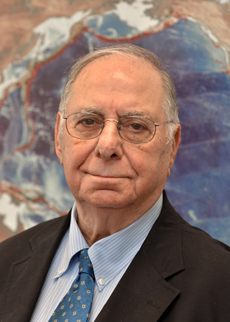
Broecker
Chair
💡 chemical_oceanography

Researchers (real GeoVerse Lab members) 12

🧑‍🔬
🔑
1909–1991
Roger Revelle
Researcher
💡 Pioneered study of the ocean's limited capacity to absorb anthropogenic CO2 (Revelle factor), founding modern climate change science
🧑‍🔬
🔑
1890–1977
Georg Wüst
Researcher
💡 Pioneered the water-mass analysis of Atlantic Ocean circulation, providing early evidence of deep boundary-current spreading central to thermohaline circulation theory
Karl Turekian🔑
1927–2013
Karl Turekian
Researcher
💡 Advanced trace element geochemistry of the oceans and deep-sea sediments, establishing quantitative abundance frameworks for marine geochemistry
Alfred C. Redfield🔑
1890–1983
Alfred C. Redfield
Researcher
💡 Discovered the Redfield ratio, the consistent stoichiometric ratio of carbon, nitrogen, and phosphorus in marine plankton and deep ocean water
🧑‍🔬
🔑
1909–1993
Hans Suess
Researcher
💡 Identified the Suess effect (fossil-fuel dilution of atmospheric radiocarbon) and co-authored the founding paper on ocean CO2 uptake with Roger Revelle
🧑‍🔬
🔑
1919–2001
Samuel Epstein
Researcher
💡 Developed the oxygen isotope paleothermometer for reconstructing ancient ocean temperatures from marine carbonate fossils
🧑‍🔬
🔑
1943–2001
John M. Edmond
Researcher
💡 Pioneered the chemistry of mid-ocean ridge hydrothermal vents, quantifying their role in ocean trace element and radioisotope budgets
🧑‍🔬
🔑
1926–2003
Harmon Craig
Researcher
💡 Pioneered noble gas and stable isotope oceanography, establishing the Craig line for meteoric water isotopes and mantle helium tracing in the deep ocean
🧑‍🔬
🔑
1921–2008
Edward D. Goldberg
Researcher
💡 Founded the study of marine pollution chemistry, pioneering methods for tracing anthropogenic trace metals and contaminants in the ocean
🧑‍🔬
🔑
1927–2016
Geoffrey Eglinton
Researcher
💡 Pioneered organic geochemistry and molecular fossil (biomarker) analysis of marine sediments to reconstruct past ocean environments
🧑‍🔬
🔑
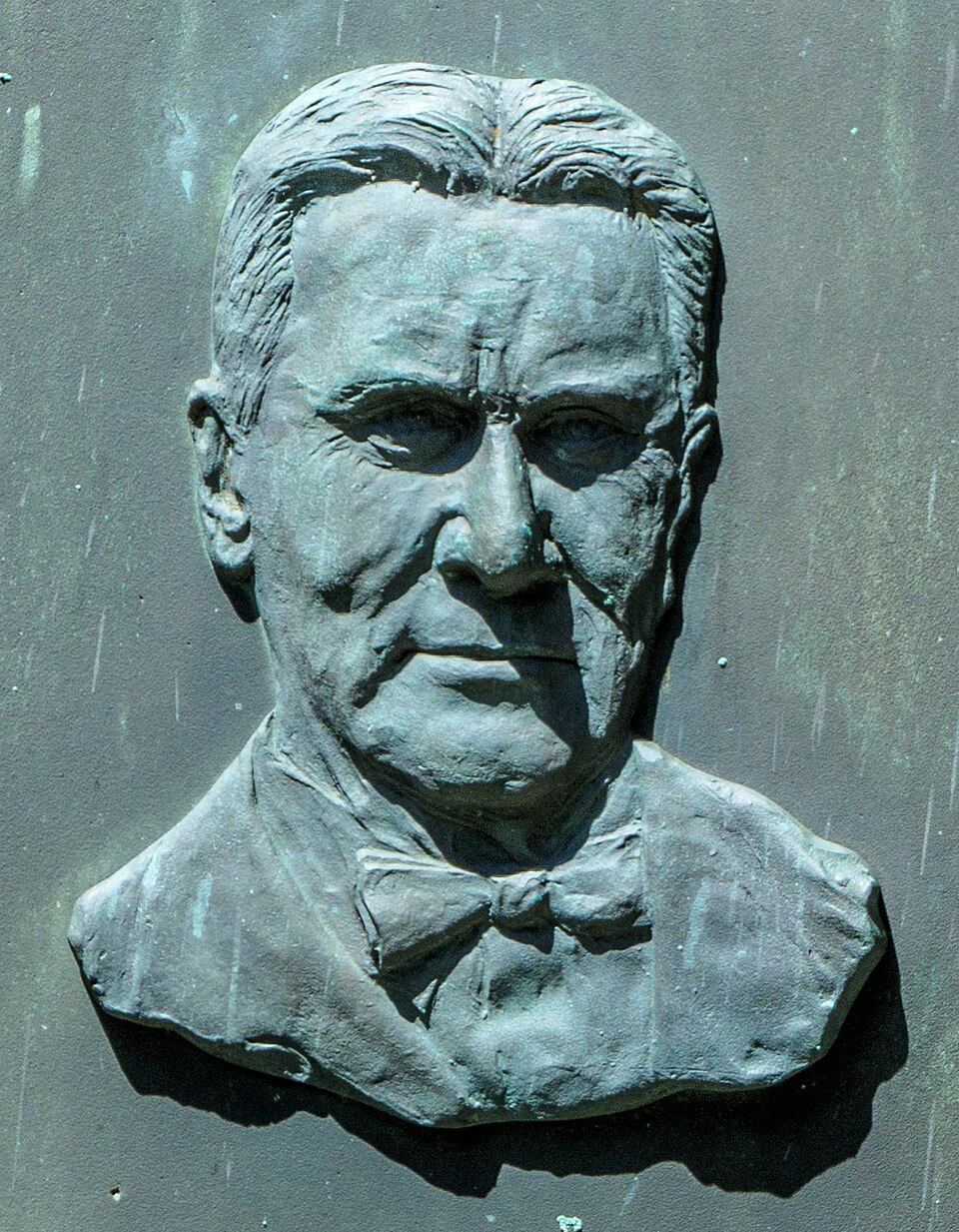
1871–1949
Martin Knudsen
Researcher
💡 Established the standard chlorinity/salinity tables (Knudsen tables) defining the precise chemical composition standard of seawater used worldwide
🧑‍🔬
🔑
1935–1993
John Martin
Researcher
💡 Proposed the iron hypothesis, showing iron limits phytoplankton growth in high-nutrient low-chlorophyll ocean regions, linking trace metal chemistry to the carbon cycle