🎓GeoAcademyGeoVerse Lab
AI & Computing Sciences College

Robotics & Embodied AI Center

The Robotics & Embodied AI Center builds students' ability to design autonomous robotic systems that unify perception, planning, and physical interaction, grounded in exploration robotics for planetary, deep-sea, subsurface, and aerial missions. Students practice manipulation, SLAM-based navigation, and vision-language-action models, and work through the full sim-to-real pipeline of transferring policies learned in simulation onto physical robots. By pairing theory with hands-on work on real robotic platforms, graduates gain the ability to design and build embodied AI systems end to end, ready for deployment in extreme geoscience exploration environments.
⚙️ GeoAcademy System Administration College🖥️ AI & Computing Sciences College🔬 Basic Sciences College⚡ Intelligent Geophysical Exploration College🛢️ Resource & Energy Engineering College🌍 Applied Geoscience Solutions College💼 Economics, Policy & Strategy for the Future College🎓 Education & Training Development College🚀 Innovation & International Collaboration College
Machine Learning DepartmentComputer Vision DepartmentNatural Language Processing DepartmentHigh-Performance Computing DepartmentQuantum Computing DepartmentGenerative AI & Foundation Models CenterReinforcement Learning & Agents CenterAI Safety & Alignment CenterAI for Science CenterRobotics & Embodied AI Center
🤖
🔑
George Devol
Chair

Researchers (real GeoVerse Lab members) 15

Franz Reuleaux🔑
1829–1905
Franz Reuleaux
Researcher
💡 Founded the systematic science of kinematics of machinery, developing the formal classification of mechanisms (kinematic pairs, chains) that underlies the mathematical description of every robotic joint and linkage
Victor Scheinman🔑
1942–2016
Victor Scheinman
Researcher
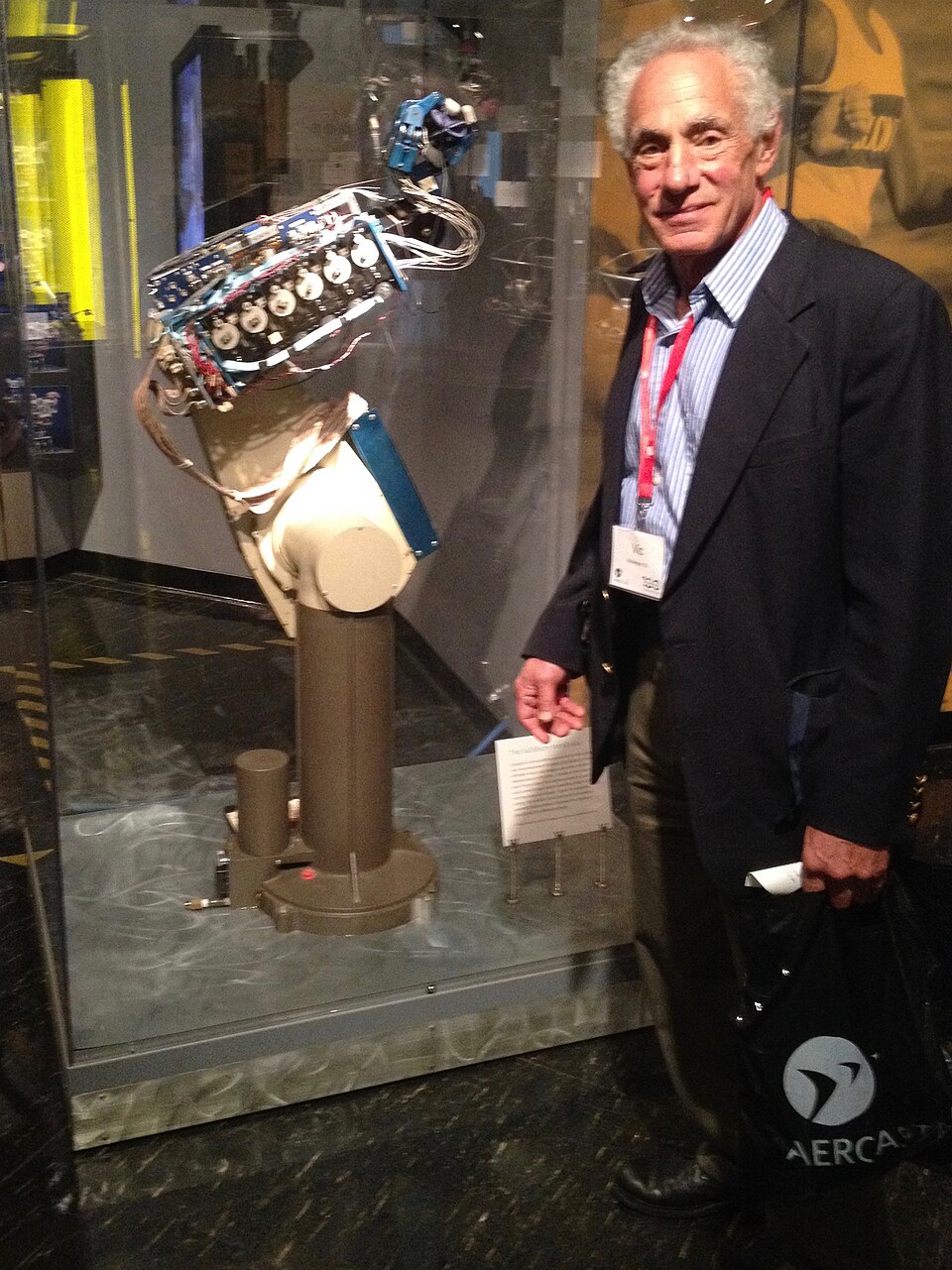
💡 Designed the Stanford Arm and the PUMA robot, the first robotic manipulators designed from the ground up for general-purpose programmable manipulation rather than fixed industrial tasks, founding modern dexterous robotic arm design
Friedrich Robert Helmert🔑
1843–1917
Friedrich Robert Helmert
Researcher
💡 Founded modern geodesy and the least-squares adjustment theory for combining many noisy measurements into a consistent, optimal estimate of position and shape — the exact statistical estimation principle underlying every SLAM algorithm's joint optimization of robot pose and map
🧑‍🔬
🔑
1927–2017
L. R. Ford Jr.
Researcher
💡 Co-developed the Ford-Fulkerson algorithm for network flow and the Bellman-Ford shortest-path algorithm, providing the exact graph-search algorithms that discretized motion planning and path planning in robotics directly implement
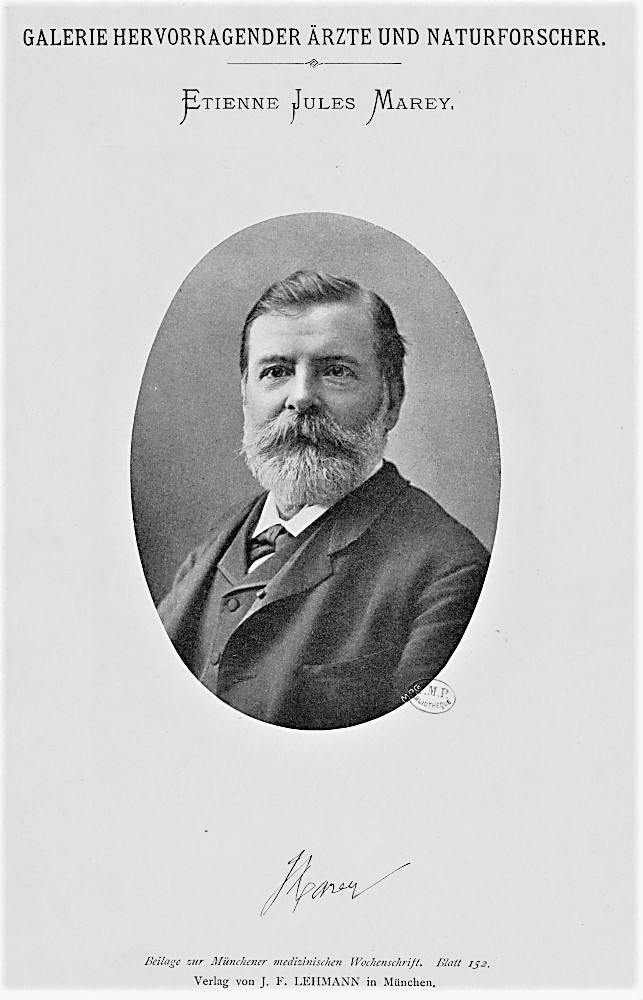
Étienne-Jules Marey🔑
1830–1904
Étienne-Jules Marey
Researcher
💡 Invented chronophotography to precisely capture and analyze the sequential mechanics of animal and human locomotion, founding the quantitative biomechanical gait analysis that legged robot locomotion controllers are engineered to reproduce and improve upon
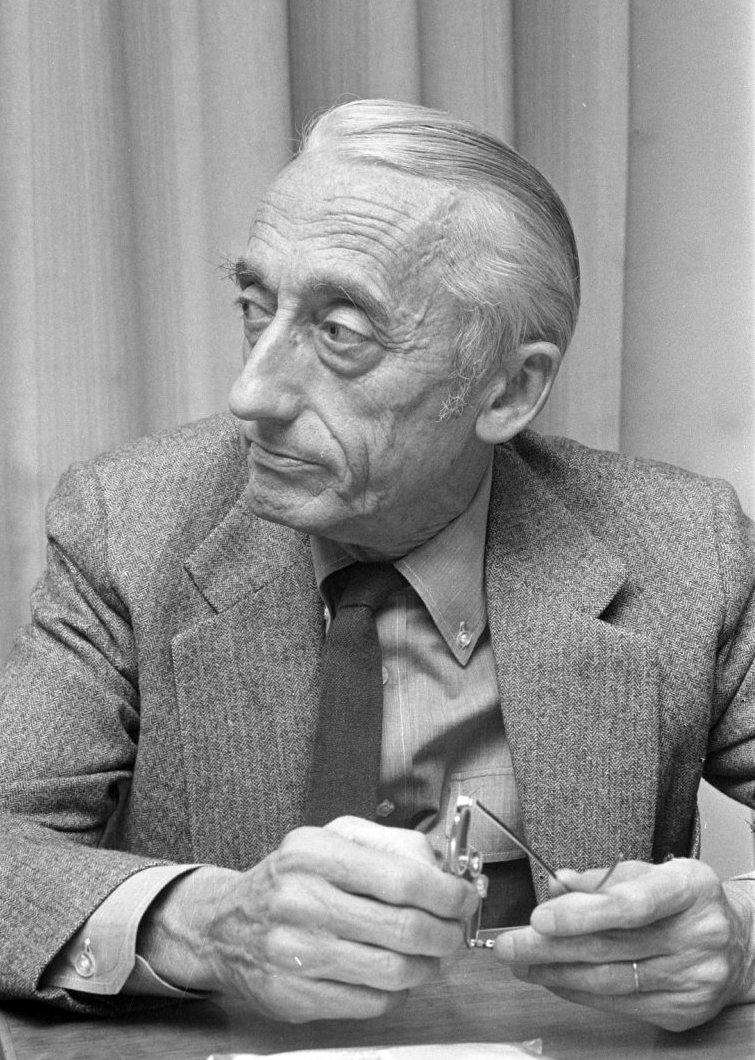
Jacques Cousteau🔑
1910–1997
Jacques Cousteau
Researcher
💡 Co-invented the Aqua-Lung and pioneered underwater exploration technology and methodology, founding the practice of systematic underwater exploration that autonomous and remotely operated underwater vehicles (AUVs/ROVs) now carry out robotically
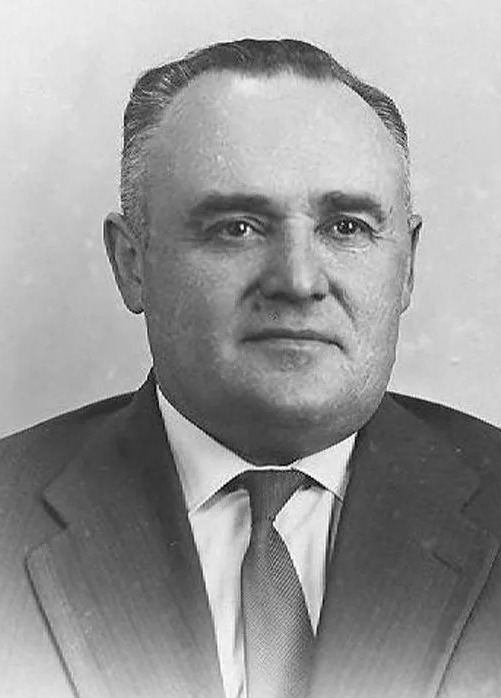
Sergei Korolev🔑
1906–1966
Sergei Korolev
Researcher
💡 Chief designer of the Soviet space program, leading the development of Sputnik, Vostok, and the Lunokhod robotic lunar rover program, founding planetary robotic exploration as a discipline
William Morton Wheeler🔑
1865–1937
William Morton Wheeler
Researcher
💡 Coined the term 'superorganism' and pioneered the scientific study of insect colonies as decentralized collective systems achieving complex behavior from simple local interactions — the founding biological model that swarm robotics directly emulates
🧑‍🔬
🔑
1915–2000
John Tukey
Researcher
💡 Founded robust statistics and exploratory data analysis, developing methods for building models that perform reliably despite deviations between assumed and actual data distributions — directly foundational to the robustness theory underlying sim-to-real transfer and domain randomization in robot learning
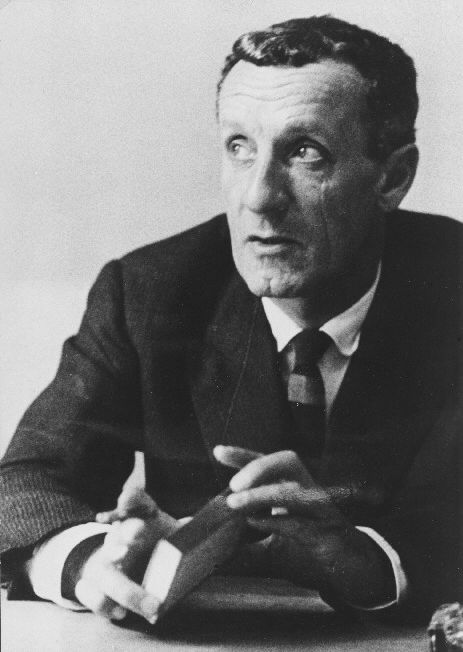
Maurice Merleau-Ponty🔑
1908–1961
Maurice Merleau-Ponty
Researcher
💡 Founded the phenomenology of embodiment, arguing that perception, cognition, and meaning are fundamentally grounded in an agent's physical body and its active engagement with the world — the foundational philosophy underlying embodied AI's claim that intelligence requires physical interaction, not just abstract computation
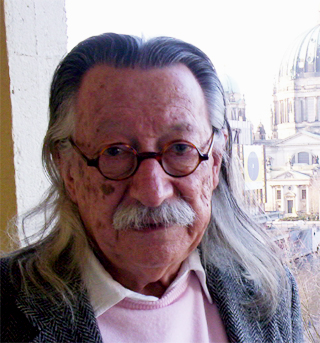
Joseph Weizenbaum🔑
1923–2008
Joseph Weizenbaum
Researcher
💡 Created ELIZA, the first conversational human-computer interaction program, and became a foundational critic of over-trusting anthropomorphized machines — establishing both the technical origins and the critical ethical framework central to human-robot interaction research
Igor Sikorsky🔑
1889–1972
Igor Sikorsky
Researcher
💡 Designed and built the first practical, mass-produced helicopter, founding vertical-lift rotorcraft engineering — the direct technological ancestor of the rotorcraft drones used for geological aerial mapping and survey
Raymond Goertz🔑
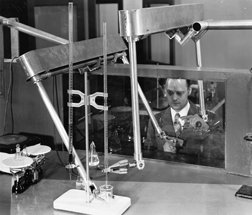
1915–1970
Raymond Goertz
Researcher
💡 Invented the first electromechanical master-slave teleoperator, enabling a human operator to remotely and safely manipulate hazardous radioactive materials, founding the discipline of teleoperation directly applied today to remote drilling, deep-sea ROV manipulation, and hazardous-site robotic inspection
Stephen Timoshenko🔑
1878–1972
Stephen Timoshenko
Researcher
💡 Founded modern engineering mechanics of elasticity and strength of materials, developing the beam-bending and elastic-deformation theory that directly underlies the mechanical design and modeling of compliant, deformable soft robotic structures
William Grey Walter🔑
1910–1977
William Grey Walter
Researcher
💡 Built Elmer and Elsie, the first autonomous mobile robots exhibiting complex, life-like behavior from simple reactive circuits without central planning or symbolic representation — directly predating and foundational to Rodney Brooks's subsumption architecture and modern behavior-based robotics