🎓GeoAcademyGeoVerse Lab
AI & Computing Sciences College

Machine Learning Department

The Machine Learning Department teaches deep learning architectures end to end - transformers for sequential geophysical data, graph neural networks for spatial relationships, physics-informed neural networks, and federated learning - from theory through implementation. Students apply these algorithms to earth-science prediction and classification tasks, experiencing the full cycle of model design, training, and evaluation. Along the way, they develop the judgment to select and tune architectures that match a dataset's character, whether temporal, spatial, or physically constrained. Graduates leave able to sit down with an unfamiliar geoscience dataset and design a fitting deep learning model from scratch, unaided.
⚙️ GeoAcademy System Administration College🖥️ AI & Computing Sciences College🔬 Basic Sciences College⚡ Intelligent Geophysical Exploration College🛢️ Resource & Energy Engineering College🌍 Applied Geoscience Solutions College💼 Economics, Policy & Strategy for the Future College🎓 Education & Training Development College🚀 Innovation & International Collaboration College
Machine Learning DepartmentComputer Vision DepartmentNatural Language Processing DepartmentHigh-Performance Computing DepartmentQuantum Computing DepartmentGenerative AI & Foundation Models CenterReinforcement Learning & Agents CenterAI Safety & Alignment CenterAI for Science CenterRobotics & Embodied AI Center
🤖
🔑
Hinton
Chair
💡 Deep Learning & Neural Networks

Researchers (real GeoVerse Lab members) 15

🧑‍🔬
🔑
1938–2014
Alexey Chervonenkis
Researcher
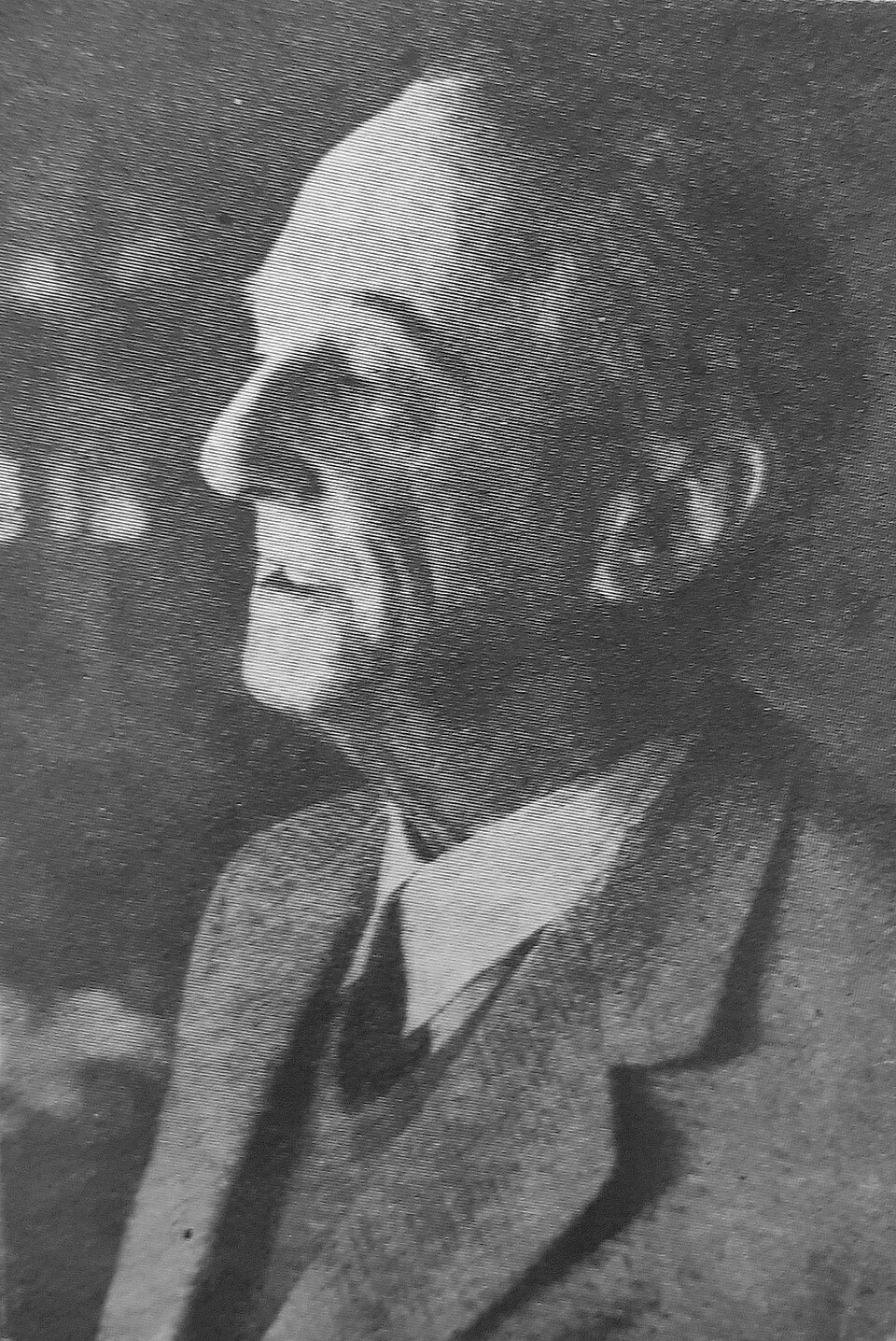
💡 Co-developed (with Vladimir Vapnik) VC (Vapnik-Chervonenkis) theory, the mathematical foundation determining when and how much a learning algorithm can generalize from finite data — the theoretical bedrock of all modern machine learning generalization guarantees
🧑‍🔬
🔑
1928–2005
Leo Breiman
Researcher
💡 Invented CART (Classification and Regression Trees), bagging, and random forests, founding the ensemble-tree methodology that remains among the most widely used machine learning methods for structured/tabular geoscience data
🧑‍🔬
🔑
1883–1932
James Mercer
Researcher
💡 Proved Mercer's theorem, characterizing when a function can be expressed as an inner product in a (possibly infinite-dimensional) feature space — the exact mathematical justification for the 'kernel trick' underlying support vector machines and kernel methods
Hugo Steinhaus🔑
1887–1972
Hugo Steinhaus
Researcher
💡 First proposed the k-means clustering approach (partitioning data to minimize within-group variance), founding the most widely used unsupervised learning algorithm for discovering structure in unlabeled geoscience data
Frank Harary🔑
1921–2005
Frank Harary
Researcher
💡 Known as the 'father of modern graph theory', wrote the field's standard textbook and systematized graph-theoretic concepts (adjacency, connectivity, isomorphism) that graph neural networks directly operate on for modeling spatial/relational geoscience data
C. R. Rao🔑
1920–2023
C. R. Rao
Researcher
💡 Founded the theory of statistical estimation efficiency (Cramér-Rao bound, Rao-Blackwell theorem) determining how efficiently local statistical information can be combined into a global estimate — directly foundational to aggregating locally-computed updates in federated learning
Ulf Grenander🔑
1923–2016
Ulf Grenander
Researcher
💡 Founded pattern theory, a general statistical framework for learning the underlying generative structure of complex signals (images, shapes) directly from unlabeled data, foundational to self-supervised representation learning
David J. C. MacKay🔑
1967–2016
David J. C. MacKay
Researcher
💡 Founded practical Bayesian methods for neural networks, showing how to place probability distributions over network weights to obtain calibrated predictive uncertainty, directly foundational to modern Bayesian deep learning for high-stakes geoscience prediction
🧑‍🔬
🔑
1915–2001
Herbert Robbins
Researcher
💡 Co-invented the Robbins-Monro stochastic approximation algorithm, the first rigorous method for finding the root/optimum of a function using noisy stochastic observations — the exact mathematical ancestor of stochastic gradient descent, the workhorse optimizer of all deep learning
🧑‍🔬
🔑
1928–2010
Joseph B. Kruskal
Researcher
💡 Invented multidimensional scaling (MDS), the foundational method for embedding high-dimensional data into a low-dimensional space while preserving pairwise distances — the direct mathematical ancestor of modern manifold learning methods (t-SNE, UMAP)
Francis Ysidro Edgeworth🔑
1845–1926
Francis Ysidro Edgeworth
Researcher
💡 Developed among the earliest rigorous statistical methods for identifying outliers/anomalous observations in data ('Edgeworth's criterion'), founding the statistical theory of anomaly detection later formalized in modern novelty-detection algorithms
Donald Michie🔑
1923–2007
Donald Michie
Researcher
💡 An AI founding-generation figure (Bletchley Park codebreaker) who pioneered the concept of machines that improve their own learning strategies over experience ('learning to learn'), founding the conceptual root of modern meta-learning and few-shot learning
Solomon Kullback🔑
1907–1994
Solomon Kullback
Researcher
💡 Co-developed the Kullback-Leibler divergence, the fundamental information-theoretic measure of difference between probability distributions, directly foundational to information-theoretic feature selection, model comparison, and regularization throughout machine learning
Vladimir Arnold🔑
1937–2010
Vladimir Arnold
Researcher
💡 Proved (with Kolmogorov) the Kolmogorov-Arnold representation theorem, showing any multivariate continuous function can be represented as a composition of univariate functions — the theoretical foundation of universal function approximation now directly revived in Kolmogorov-Arnold Networks (KANs)
Herman Chernoff🔑
1923–2026
Herman Chernoff
Researcher
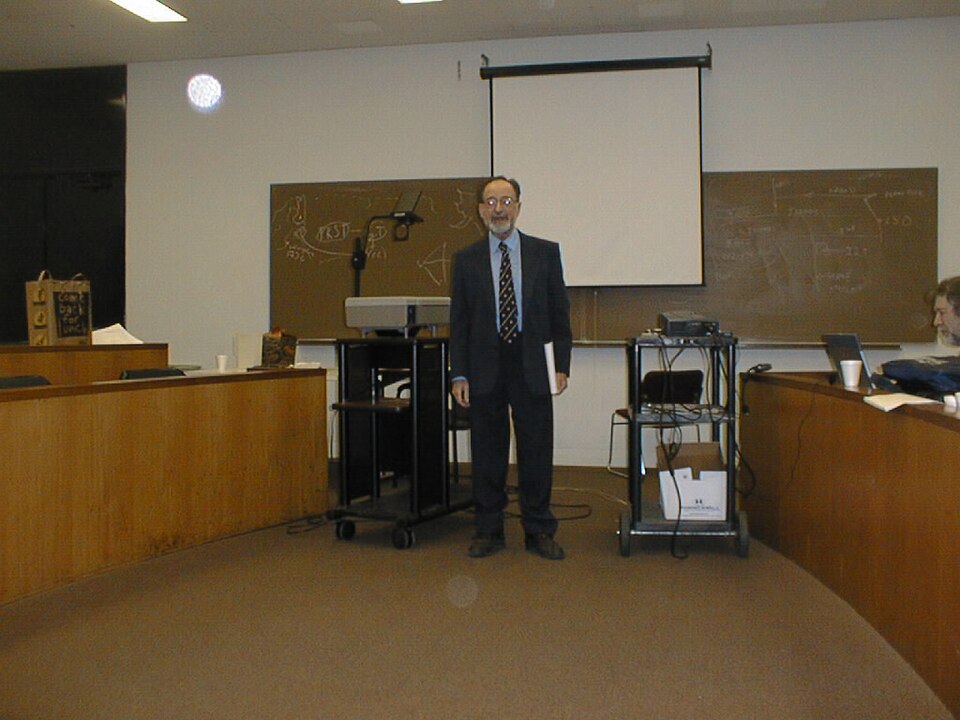
💡 Founded the theory of sequential/adaptive experimental design — choosing which data point to observe next to maximize information gain — the exact statistical-decision-theoretic foundation of active learning, where a model queries the most informative unlabeled samples