🎓GeoAcademyGeoVerse Lab
Resource & Energy Engineering College

Rock Mechanics & Geomechanics Department

The Rock Mechanics & Geomechanics Department focuses on the stress-dependent behavior of rock that governs the safety of subsurface facilities. Students learn to quantitatively predict when and how rock fails using in-situ-stress and poroelastic modeling together with rock-failure-criterion simulation, and apply this to wellbore-stability assessment and hydraulic-fracturing design. Graduates are ready to personally evaluate subsurface integrity and set safety criteria for a range of underground operations, including CO2 and hydrogen storage.
⚙️ GeoAcademy System Administration College🖥️ AI & Computing Sciences College🔬 Basic Sciences College⚡ Intelligent Geophysical Exploration College🛢️ Resource & Energy Engineering College🌍 Applied Geoscience Solutions College💼 Economics, Policy & Strategy for the Future College🎓 Education & Training Development College🚀 Innovation & International Collaboration College
Well & Production Engineering DepartmentRock Mechanics & Geomechanics DepartmentGeothermal Energy Engineering DepartmentHydrogen Energy & Storage DepartmentCarbon Engineering DepartmentMining Engineering DepartmentNuclear Energy Engineering DepartmentReservoir Modeling & Recovery Department
Terzaghi🔑
Terzaghi
Chair
💡 Rock Mechanics & Geotechnical Engineering

Researchers (real GeoVerse Lab members) 22

🧑‍🔬
🔑
1877–1960
Ernest Masson Anderson
Researcher
💡 The Dynamics of Faulting (1905): classified crustal stress regimes (normal, strike-slip, reverse) from principal-stress orientation, the Andersonian theory still used to characterize in-situ stress state
🧑‍🔬
🔑
1907–1979
John Conrad Jaeger
Researcher
💡 Co-author of Fundamentals of Rock Mechanics (with N.G.W. Cook), the standard modern textbook systematizing rock failure criteria and strength theory
🧑‍🔬
🔑
1903–1940
Leo Rendulic
Researcher
💡 Extended Terzaghi's one-dimensional consolidation theory to multi-dimensional pore-pressure/effective-stress states (1935-1936), the Terzaghi-Rendulic consolidation theory
🧑‍🔬
🔑
1841–1901
Ernst Gustav Kirsch
Researcher
💡 The Kirsch equations (1898): closed-form elastic solution for the stress concentration around a circular hole in an infinite plate, the universal basis for analyzing stress around a wellbore/borehole
🧑‍🔬
🔑
1918–2001
Daniel C. Drucker
Researcher
💡 Drucker-Prager yield criterion (1952), the standard continuum-plasticity failure model for pressure-dependent frictional materials (soils, sands, rocks) used to simulate cavity collapse and sand production
Sergey Khristianovich🔑
1908–2000
Sergey Khristianovich
Researcher
💡 Co-developed the KGD (Khristianovich-Zheltov) plane-strain hydraulic fracture propagation model (1955), one of the two foundational analytical models (with PKN) for hydraulic fracture width and extent
🧑‍🔬
🔑
1924–2006
Robert R. Berg
Researcher
💡 Capillary Pressures in Stratigraphic Traps (1975): established the capillary-displacement-pressure method for calculating maximum trapped fluid-column height, the founding quantitative theory of caprock/seal capacity
🧑‍🔬
🔑
1927–2015
James Byerlee
Researcher
💡 Byerlee's law (1978): the near-universal empirical frictional-strength relationship for rock, the standard criterion used to assess fault reactivation and slip under injection-induced stress/pore-pressure change
🧑‍🔬
🔑
1928–2008
Robert E. Gibson
Researcher
💡 Extended one-dimensional consolidation theory to finite-strain, self-weight, and layered/heterogeneous cases (1958-1967), the mathematical basis for compaction/subsidence modeling of thick, heterogeneous compressible strata
🧑‍🔬
🔑
1922–2018
Don U. Deere
Researcher
💡 Rock Quality Designation (RQD, 1964): simple quantitative core-logging index of rock-mass quality, the required foundational input to every subsequent rock mass classification system (RMR, Q-system, GSI)
🧑‍🔬
🔑
1911–1974
David T. Griggs
Researcher
💡 Invented the Griggs apparatus (1960s), the most widely used high-pressure/temperature triaxial rock deformation testing apparatus, founding experimental rock deformation as a discipline
🧑‍🔬
🔑
1906–1987
Raymond D. Mindlin
Researcher
💡 Mindlin-Deresiewicz theory of tangential contact force between elastic spheres (1953), the literal contact-mechanics law used in nearly all discrete element method (DEM) codes for granular/rock simulation
🧑‍🔬
🔑
1913–2004
John Argyris
Researcher
💡 Matrix (direct stiffness) formulation of structural analysis (1954-1955), among the founding formulations of the modern finite element method (FEM)
🧑‍🔬
🔑
1930–1997
Melvin Friedman
Researcher
💡 Founded the Texas A&M Center for Tectonophysics; conducted extensive experimental confined-pressure deformation testing of evaporite (salt) and carbonate rocks, foundational to modern salt-mechanics/creep understanding
🧑‍🔬
🔑
1953–2010
Olivier Coussy
Researcher
💡 Developed the general theory of coupled thermo-hydro-mechanical-chemical (THMC) behavior of porous continua (1995 onward), unifying and generalizing poroelasticity into a single thermodynamically consistent multiphysics framework
🧑‍🔬
🔑
1907–1998
George R. Irwin
Researcher
💡 Defined the stress intensity factor K (1957), the founding concept of linear elastic fracture mechanics (LEFM) used to determine fracture toughness and predict crack propagation
🧑‍🔬
🔑
1929–2017
Zvi Hashin
Researcher
💡 Hashin-Shtrikman variational bounds (1963), the rigorous effective-medium bounds for the elastic properties of heterogeneous/anisotropic multiphase materials, applied to layered and laminated rock such as shale
🧑‍🔬
🔑
1922–2022
Branko Ladanyi
Researcher
💡 Ladanyi-Archambault rock joint shear-strength and dilatancy model (1970), one of the most cited constitutive models of rock discontinuity shear behavior
🧑‍🔬
🔑
1935–2025
Richard E. Goodman
Researcher
💡 Developed block theory (with Gen-Hua Shi), the standard kinematic method for identifying removable, potentially unstable blocks in jointed rock slopes and excavations, and invented the Goodman Jack for in-situ rock deformability testing
Ladislaus von Rabcewicz🔑
1893–1975
Ladislaus von Rabcewicz
Researcher
💡 Principal developer and namer of the New Austrian Tunneling Method (NATM, 1957-1965), which uses the surrounding rock mass itself as a load-bearing structural element monitored and supported adaptively during excavation
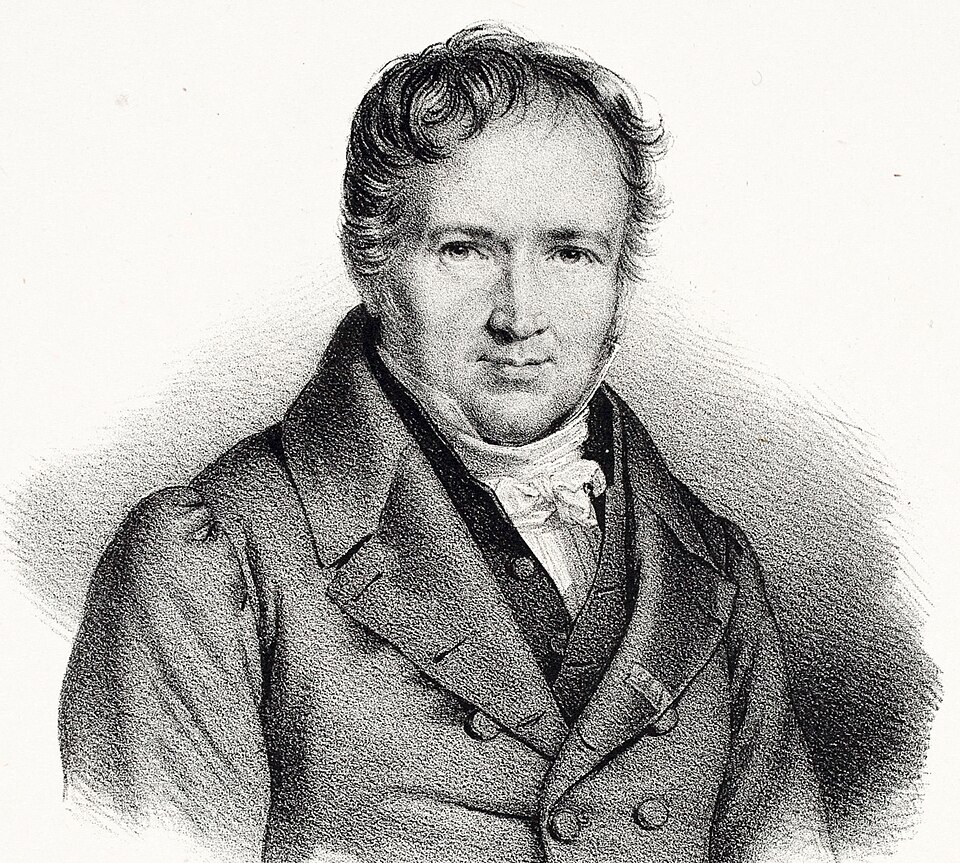
Siméon Denis Poisson🔑
1781–1840
Siméon Denis Poisson
Researcher
💡 Poisson's ratio and the equations of linear elasticity; Poisson distribution
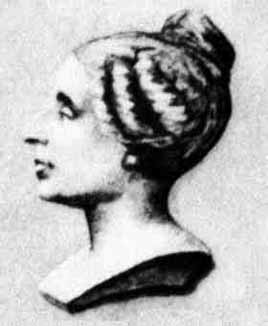
Sophie Germain🔑
1776–1831
Sophie Germain
Researcher
💡 Pioneering theory of elasticity of vibrating plates (Paris Academy prize, 1816)