
🎓GeoAcademyGeoVerse Lab
Intelligent Geophysical Exploration College

Electromagnetic Methods Department

The Electromagnetic Methods Department teaches students to quantitatively interpret subsurface electrical properties through controlled-source and magnetotelluric (MT) techniques. Coursework covers hands-on acquisition and processing of EM sounding and profiling data, with practicum projects in resistivity mapping, fluid-saturation estimation, and deep crustal interpretation. Graduates are ready for immediate fieldwork, designing and interpreting EM surveys on their own for resource exploration, groundwater, and geothermal investigations.
⚙️ GeoAcademy System Administration College🖥️ AI & Computing Sciences College🔬 Basic Sciences College⚡ Intelligent Geophysical Exploration College🛢️ Resource & Energy Engineering College🌍 Applied Geoscience Solutions College💼 Economics, Policy & Strategy for the Future College🎓 Education & Training Development College🚀 Innovation & International Collaboration College
Seismic Exploration & Imaging DepartmentGravity & Magnetic Methods DepartmentElectromagnetic Methods DepartmentEarthquake Seismology DepartmentIntegrated Geophysics & Interpretation DepartmentInversion & Modeling DepartmentWell Logging & Petrophysics Department
Schlumberger🔑
Schlumberger
Chair
💡 Electromagnetic Exploration & Resistivity Methods

Researchers (real GeoVerse Lab members) 13

🧑‍🔬
🔑
1900–1971
Louis Cagniard
Researcher
💡 Introduced the magnetotelluric (MT) prospecting method in his 1953 paper, founding modern passive-source EM exploration
🧑‍🔬
🔑
1930–2008
Ulrich Schmucker
Researcher
💡 Pioneer of geomagnetic deep sounding (Erdmagnetische Tiefensondierung), mapping crust-mantle conductivity anomalies
🧑‍🔬
🔑
1928–2019
Keeva Vozoff
Researcher
💡 Developed 2D magnetotelluric inversion (1969) and joint DC-resistivity/MT inversion (1975, with Jupp); 'father of 3D EM modeling'
🧑‍🔬
🔑
1923–2002
Stanley H. Ward
Researcher
💡 Leading authority on electromagnetic theory applied to mining and geothermal exploration; developed and advanced controlled-source audio-magnetotellurics (CSAMT); chief editor of SEG's Electromagnetic Methods in Applied Geophysics
🧑‍🔬
🔑
1922–2015
Charles S. Cox
Researcher
💡 Pioneered seafloor electromagnetic field measurements at Scripps Institution of Oceanography, laying the observational foundation for marine controlled-source EM (CSEM) exploration
🧑‍🔬
🔑
1924–1998
James R. Wait
Researcher
💡 Foundational contributions to electromagnetic wave propagation and induction theory applied to geophysical exploration; author of 8 books and over 800 papers
🧑‍🔬
🔑
1925–2009
Anthony R. Barringer
Researcher
💡 Invented the INPUT (Induced Pulse Transient) airborne electromagnetic system, credited with tens of billions of dollars in ore-deposit discoveries
🧑‍🔬
🔑
1924–2011
Harold O. Seigel
Researcher
💡 PhD thesis (University of Toronto, 1949) laid the mathematical foundations of the induced polarization (IP) method for mineral exploration; founder of Scintrex Ltd.
🧑‍🔬
🔑
1931–2018
Misac Nabighian
Researcher
💡 Editor of SEG's two-volume 'Electromagnetic Methods in Applied Geophysics'; major theoretical contributions to time-domain EM/IP and potential-field methods
John Call Cook🔑
1918–2012
John Call Cook
Researcher
💡 Foundational contributions establishing ground-penetrating radar (GPR) as a geophysical exploration method; also pioneered airborne radioactivity surveying and electrostatic crevasse detection
🧑‍🔬
🔑
1873–1954
Frank Wenner
Researcher
💡 Devised the four-electrode Wenner array (1915-16) at the US Bureau of Standards, the foundational electrode configuration for DC resistivity surveying and modern electrical resistivity tomography
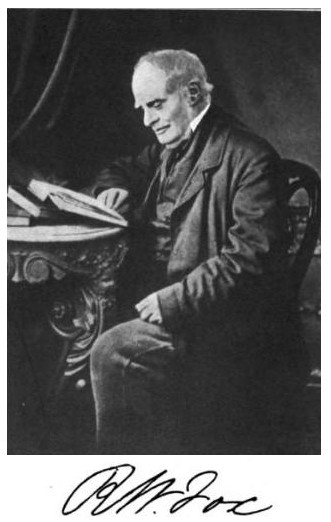
Robert Were Fox🔑
1789–1877
Robert Were Fox
Researcher
💡 First to measure and interpret self-potential (spontaneous-potential) anomalies in Cornish mines (from 1830), founding the self-potential exploration method
🧑‍🔬
🔑
1926–2022
Norman R. Paterson
Researcher
💡 Founded Huntec Ltd., a leading manufacturer of geophysical EM instrumentation, and advanced interpretation methods for airborne/ground time-domain EM in mineral exploration