🎓GeoAcademyGeoVerse Lab
GeoAcademy System Administration College

Software Engineering & Development Center

This department trains software engineers to treat research software as a first-class artifact. Students work project by project across concrete artifact types — complete verified packages (GeoCode), micro-function blocks (GeoHub), verified numerical modules (GeoSDK), agent-executable knowledge blocks (GeoShelf), and GitHub research-code reproduction (GeoStream) — while learning to design taxonomies, build verification gates, and establish provenance/lineage standards distinct from database operations and application-runtime operations. Graduates leave able to take research code and turn it into a trustworthy, reusable asset on their own.
⚙️ GeoAcademy System Administration College🖥️ AI & Computing Sciences College🔬 Basic Sciences College⚡ Intelligent Geophysical Exploration College🛢️ Resource & Energy Engineering College🌍 Applied Geoscience Solutions College💼 Economics, Policy & Strategy for the Future College🎓 Education & Training Development College🚀 Innovation & International Collaboration College
Infrastructure & Cloud Operations DepartmentDatabase & Knowledge Systems DepartmentAI Operations & Automation DepartmentCybersecurity & Compliance DepartmentApplication & Simulation Operations CenterMeta-Governance & Interface CenterSoftware Engineering & Development Center
🤖
🔑
Edsger W. Dijkstra
Chair

Researchers (real GeoVerse Lab members) 18

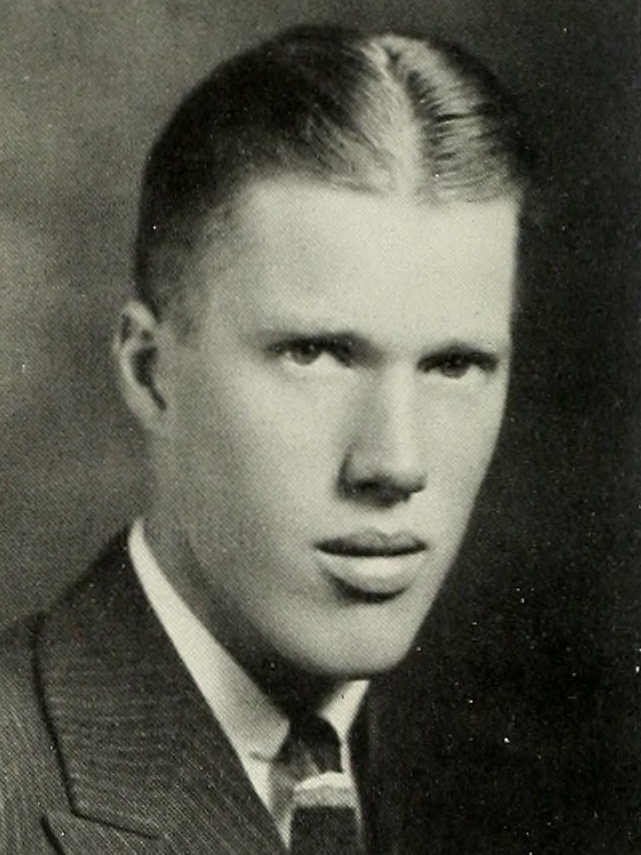
John C. Reynolds🔑
1935–2013
John C. Reynolds
Researcher
💡 Invented separation logic (2002) for verifying programs with shared mutable state, and proved the abstraction theorem for parametric polymorphism (1983)
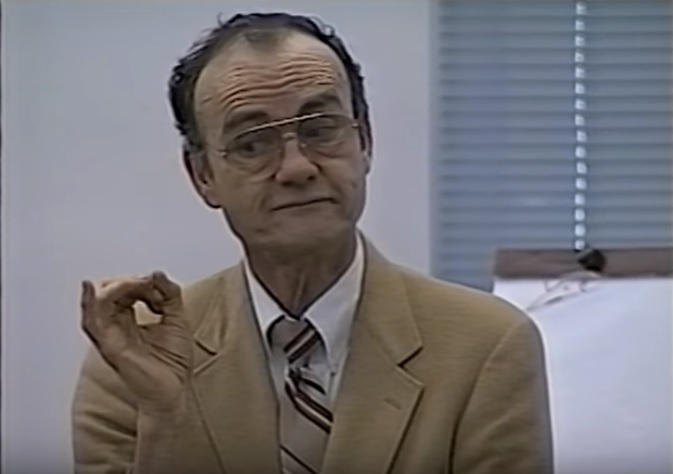
Edmund M. Clarke🔑
1945–2020
Edmund M. Clarke
Researcher
💡 Co-invented model checking with computation tree logic (CTL, 1981), enabling automated exhaustive verification of finite-state systems; 2007 ACM Turing Award
🧑‍🔬
🔑
1930–2009
Peter J. Landin
Researcher
💡 Showed programming languages could be given rigorous semantics via the lambda calculus, designing the SECD abstract machine (1964) and proposing ISWIM in 'The Next 700 Programming Languages' (1966)
🧑‍🔬
🔑
1939–2018
Zohar Manna
Researcher
💡 Co-developed deductive program synthesis (with Richard Waldinger) — deriving correct-by-construction programs directly from formal specifications — and temporal-logic verification of concurrent systems (with Amir Pnueli)
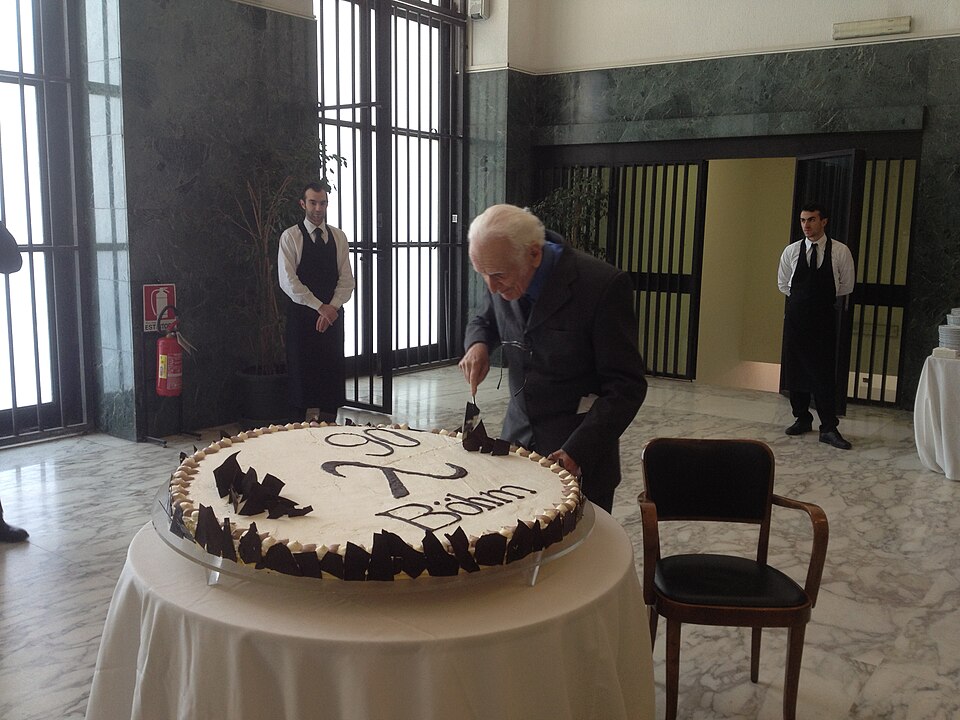
Corrado Böhm🔑
1923–2017
Corrado Böhm
Researcher
💡 Proved with Giuseppe Jacopini (1966) that any flowchart program can be rewritten using only sequence, selection, and iteration — the mathematical foundation of structured programming
🧑‍🔬
🔑
1919–1996
Harlan D. Mills
Researcher
💡 Created Cleanroom Software Engineering and the Chief Programmer Team concept, combining mathematically verified design with statistical usage-based testing
🧑‍🔬
🔑
1918–1979
Maurice H. Halstead
Researcher
💡 Founded 'Software Science' (1977), the first systematic quantitative theory of program complexity based on operator/operand counts (Halstead complexity measures)
🧑‍🔬
🔑
1933–2018
Gerald M. Weinberg
Researcher
💡 Founded the study of programmer psychology and 'egoless programming' in The Psychology of Computer Programming (1971), the intellectual basis of structured code review culture
🧑‍🔬
🔑
1934–2018
Boris Beizer
Researcher
💡 Authored Software Testing Techniques (1983), systematizing black-box/white-box testing methods and defect taxonomies into a rigorous discipline
🧑‍🔬
🔑
1933–2009
John D. Musa
Researcher
💡 Founded software reliability engineering (SRE), developing execution-time based failure models and the operational profile concept for quantitative release certification
Winston W. Royce🔑
1929–1995
Winston W. Royce
Researcher
💡 Authored 'Managing the Development of Large Software Systems' (1970), whose phased-development diagram was later popularized (and often misread) as the waterfall model
David J. Wheeler🔑
1927–2004
David J. Wheeler
Researcher
💡 Invented the closed subroutine and subroutine call mechanism (the 'Wheeler jump') on EDSAC, enabling the first subroutine libraries and modular software reuse
George E. Forsythe🔑
1917–1972
George E. Forsythe
Researcher
💡 Founded Stanford University's Computer Science Department (1965) and helped establish numerical analysis and computer science as rigorous academic disciplines
Jean E. Sammet🔑
1928–2017
Jean E. Sammet
Researcher
💡 Authored Programming Languages: History and Fundamentals (1969), the first comprehensive systematic classification of programming languages; first female president of ACM
🧑‍🔬
🔑
1944–2021
Brad J. Cox
Researcher
💡 Co-created Objective-C (1981) and proposed 'Software-ICs' — treating software modules as manufactured, catalogued, reusable parts analogous to integrated circuits
Nils J. Nilsson🔑
1933–2019
Nils J. Nilsson
Researcher
💡 Co-created STRIPS (1971), the precondition-effect action-representation formalism that let autonomous agents plan and execute sequences of knowledge blocks to reach goals; co-invented the A* search algorithm
Suzanne Briet🔑
1894–1989
Suzanne Briet
Researcher
💡 Founded documentation science with 'Qu'est-ce que la documentation?' (1951), defining a document as any object organized to serve as evidence of a fact — the conceptual root of provenance and metadata tracking
Dénes Kőnig🔑
1884–1944
Dénes Kőnig
Researcher
💡 First textbook of graph theory (1936); Kőnig's theorem on bipartite matching