🎓GeoAcademyGeoVerse Lab
GeoAcademy System Administration College

AI Operations & Automation Department

The AI Operations & Automation Department teaches students to run production-grade AI/ML systems end to end through hands-on MLOps practice. The curriculum covers (1) building and versioning model registries with MLflow, (2) designing workflow orchestration with Airflow and Prefect, (3) implementing model-serving pipelines with TorchServe and TensorFlow Serving, and (4) instrumenting monitoring and running A/B tests for continuous improvement. Graduates are ready to step directly into deploying and operating reproducible, production-grade AI systems on their own.
⚙️ GeoAcademy System Administration College🖥️ AI & Computing Sciences College🔬 Basic Sciences College⚡ Intelligent Geophysical Exploration College🛢️ Resource & Energy Engineering College🌍 Applied Geoscience Solutions College💼 Economics, Policy & Strategy for the Future College🎓 Education & Training Development College🚀 Innovation & International Collaboration College
Infrastructure & Cloud Operations DepartmentDatabase & Knowledge Systems DepartmentAI Operations & Automation DepartmentCybersecurity & Compliance DepartmentApplication & Simulation Operations CenterMeta-Governance & Interface CenterSoftware Engineering & Development Center
Shannon🔑
Shannon
Chair
💡 Information Theory & AI Operations

Researchers (real GeoVerse Lab members) 17

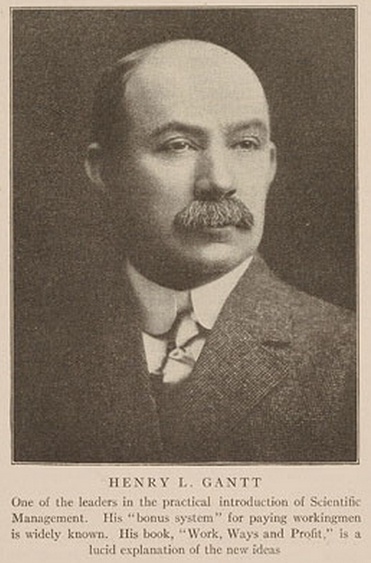
Henry Gantt🔑
1861–1919
Henry Gantt
Researcher
💡 Invented the Gantt chart (1910s), the graphical dependent-task scheduling method that is the direct conceptual ancestor of the DAG-based workflow schedulers (Airflow, Prefect, Luigi) used to orchestrate ML pipelines
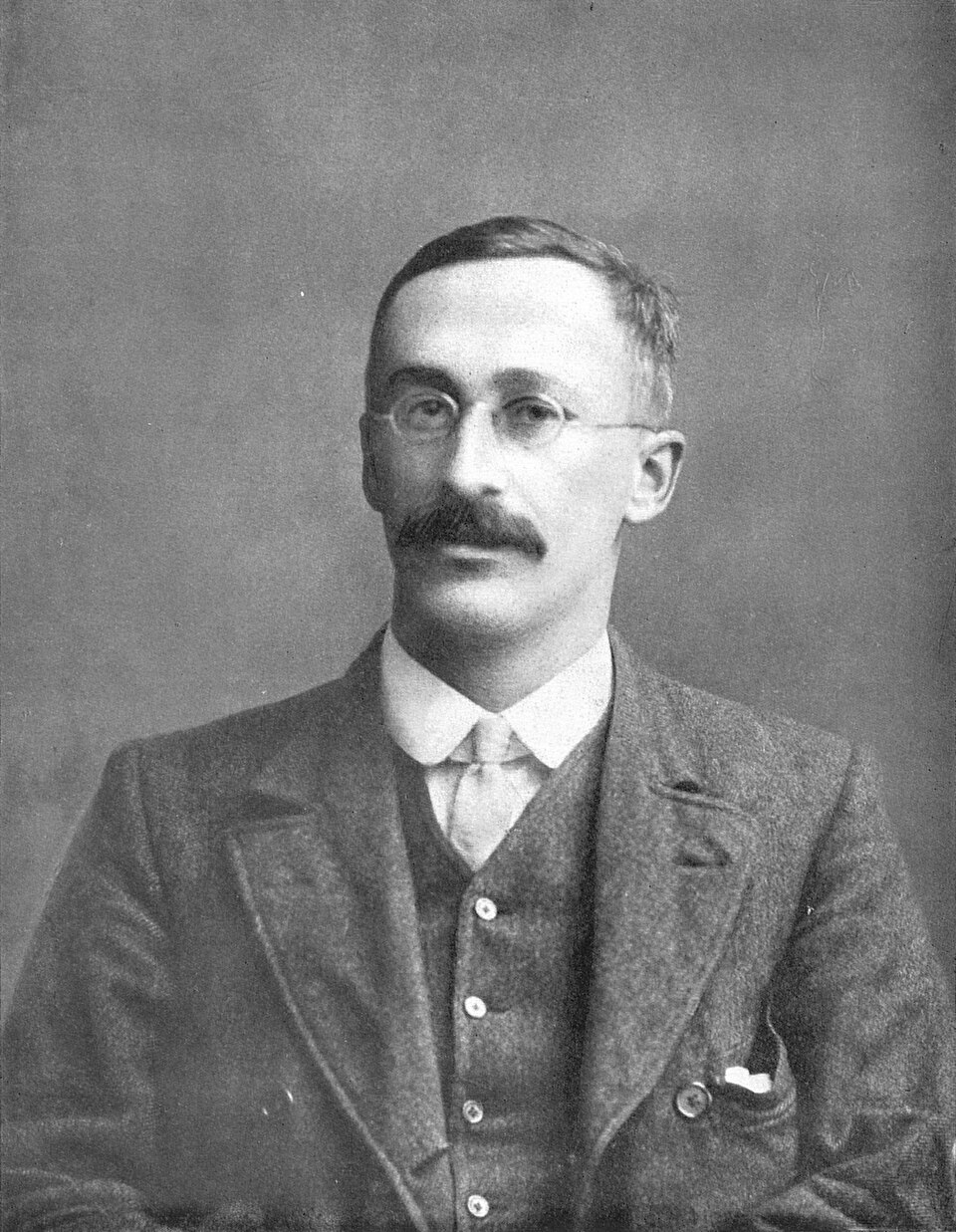
William Sealy Gosset🔑
1876–1937
William Sealy Gosset
Researcher
💡 Developed Student's t-distribution and t-test (1908, under pen name "Student") for drawing statistically valid conclusions from small numbers of trials — the same regime MLOps experiment-tracking tools face when comparing few costly training runs
Frederick Brooks🔑
1931–2022
Frederick Brooks
Researcher
💡 Managed IBM System/360 and OS/360 development and wrote "The Mythical Man-Month" (1975), the founding text on large-scale software project, version, and release management that underlies modern model-registry and release-governance practice
Charles Bachman🔑
1924–2017
Charles Bachman
Researcher
💡 Built the Integrated Data Store (IDS, 1963), one of the first database management systems, the network data model, and Bachman diagrams for visualizing data structure and lineage — foundational to modern dataset versioning and data-provenance tracking (DVC-style tools)
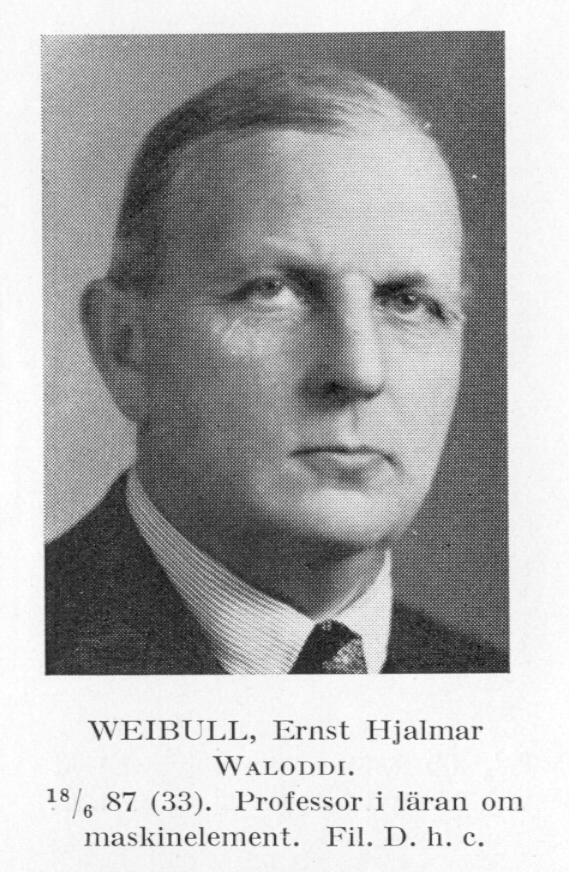
Waloddi Weibull🔑
1887–1979
Waloddi Weibull
Researcher
💡 Developed the Weibull distribution (1951), the standard statistical model of component/system time-to-failure, now used to model server, GPU, and inference-endpoint reliability and to set SLA/uptime targets for model-serving infrastructure
Ludwig von Bertalanffy🔑
1901–1972
Ludwig von Bertalanffy
Researcher
💡 Founded General Systems Theory (1940s-1968), the interdisciplinary framework for understanding complex systems of interacting components as open systems exchanging information/energy with their environment — the theoretical basis for holistic monitoring/observability of production ML systems
Walter Shewhart🔑
1891–1967
Walter Shewhart
Researcher
💡 Invented statistical process control and the control chart (1924) for detecting when a manufacturing process has shifted out of its stable statistical distribution — the direct statistical ancestor of automated data-drift and concept-drift detection in production ML monitoring
Agner Krarup Erlang🔑
1878–1929
Agner Krarup Erlang
Researcher
💡 Founded queueing theory and teletraffic engineering (Erlang B/C formulas, 1909-1917) for sizing telephone exchange capacity against fluctuating call volume — the mathematical foundation for autoscaling policies that size model-serving replica pools against fluctuating inference traffic
🧑‍🔬
🔑
1932–1982
Gwilym Jenkins
Researcher
💡 Co-developed (with George Box) the Box-Jenkins ARIMA methodology (1970) for time-series forecasting and model identification — the standard method for forecasting resource usage, request volume, and system-load trends used in AIOps capacity planning
Jonas Mockus🔑
1931–2021
Jonas Mockus
Researcher
💡 Founded Bayesian global optimization theory (from the 1970s), the surrogate-model-based method for efficiently optimizing expensive-to-evaluate black-box functions — the core algorithmic basis of modern hyperparameter-optimization and AutoML systems
Corrado Gini🔑
1884–1965
Corrado Gini
Researcher
💡 Developed the Gini coefficient/index of statistical dispersion (1912), which became the standard impurity/importance criterion (Gini impurity, mean decrease in Gini) used to explain and rank feature contributions in decision-tree and ensemble models deployed in production ML monitoring dashboards
Nicolas Minorsky🔑
1885–1970
Nicolas Minorsky
Researcher
💡 First rigorously analyzed and proposed the PID (proportional-integral-derivative) feedback controller (1922) for automatic steering of US Navy ships — the foundational feedback-control algorithm behind automated self-healing and closed-loop remediation systems in AIOps
🧑‍🔬
🔑
1895–1980
Egon Pearson
Researcher
💡 Co-developed (with Jerzy Neyman) the Neyman-Pearson framework of statistical hypothesis testing (1928-1933), including the concepts of significance level, statistical power, and Type I/II error — the formal statistical basis for online A/B testing and controlled-experiment model-performance comparison
Maurice Kendall🔑
1907–1983
Maurice Kendall
Researcher
💡 Developed Kendall's tau rank correlation coefficient (1938) and related rank-statistics methods for measuring association between variables — a standard tool for feature-correlation analysis, redundancy detection, and feature selection used when building and curating feature stores
🧑‍🔬
🔑
1916–1975
Christopher Strachey
Researcher
💡 Pioneered computer time-sharing (proposing multi-user shared computer access in 1959) and co-founded denotational semantics — foundational concepts of process/resource isolation on shared hardware that underlie today's containerization and virtualization technologies (Docker, Kubernetes) used to isolate model-serving workloads
🧑‍🔬
🔑
1927–2010
Watts Humphrey
Researcher
💡 Founded the Capability Maturity Model (CMM) and Personal/Team Software Process (PSP/TSP) at the SEI (1986-2000s), the disciplined, measured, and continuously-improved software-process framework that underlies modern continuous-integration/continuous-deployment (CI/CD) practice for ML systems
🧑‍🔬
🔑
1937–1995
Barry Turner
Researcher
💡 Founded "disaster incubation theory" in "Man-Made Disasters" (1978), showing that large organizational failures accumulate silently through unnoticed small warning signs before erupting — the sociological foundation for blameless postmortem and incident-review culture in SRE/AIOps practice