GeoVerse Lab
โ† AI & Computing Sciences Division

Quantum Computing Center

Explores quantum algorithms - quantum annealing, variational quantum eigensolvers, and quantum machine learning via Qiskit and Cirq - for optimization problems in geophysical inversion and reservoir simulation, targeting NP-hard problems like seismic inversion and travel-time tomography.

โš™๏ธ GeoVerse System Administration Division๐Ÿ–ฅ๏ธ AI & Computing Sciences Division๐Ÿ”ฌ Basic Sciences Divisionโšก Intelligent Geophysical Exploration Division๐Ÿ›ข๏ธ Resource & Energy Engineering Division๐ŸŒ Applied Geoscience Solutions Division๐Ÿ’ผ Economics, Policy & Strategy Division๐ŸŽ“ Education & Training Development Division๐Ÿš€ Innovation & International Collaboration Division
Machine Learning CenterNatural Language Processing CenterComputer Vision CenterHigh-Performance Computing CenterQuantum Computing CenterGenerative AI & Foundation Models CenterReinforcement Learning & Agents CenterAI Safety & Alignment CenterAI for Science CenterRobotics & Embodied AI Center
Richard Feynman๐Ÿ”‘
โญ Center Chief
Richard Feynman
Center Head
๐Ÿ’ก Quantum electrodynamics, quantum computing
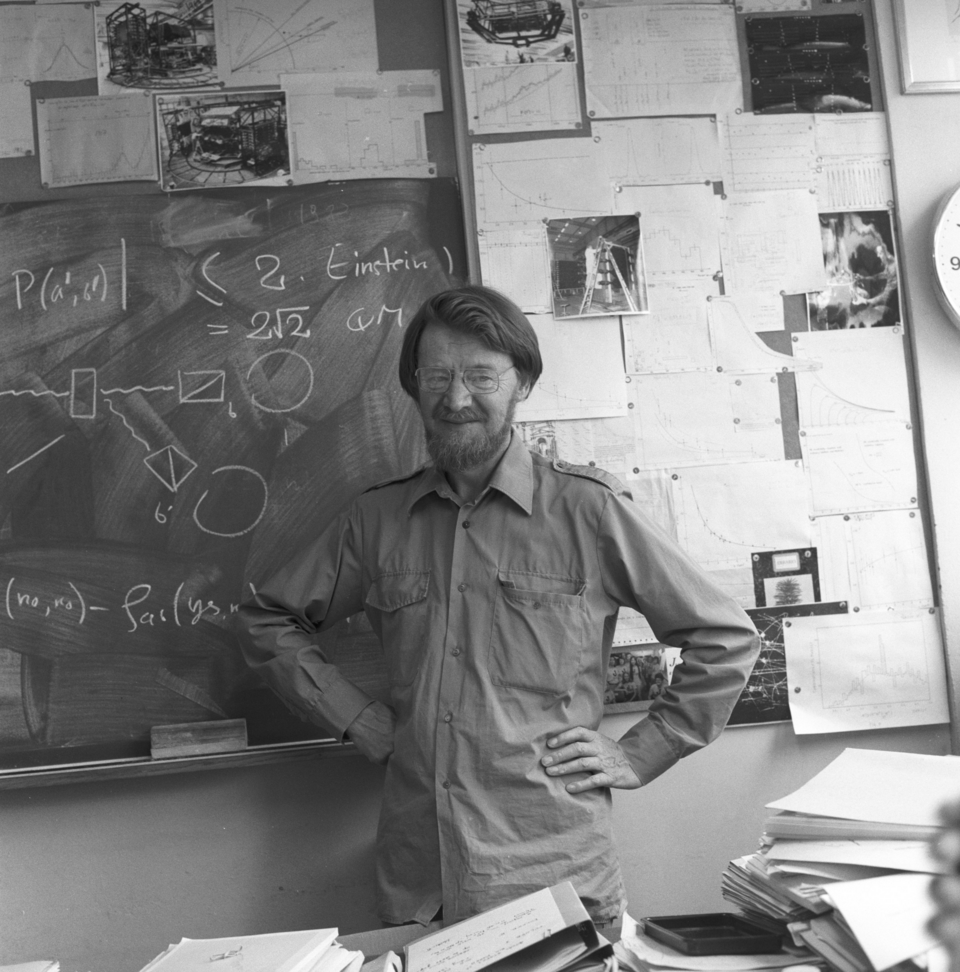
John Stewart Bell๐Ÿ”‘
1928โ€“1990
John Stewart Bell
Researcher
๐Ÿ’ก Derived Bell's theorem and Bell inequalities, rigorously proving that quantum entanglement produces correlations impossible for any local hidden-variable theory โ€” the theoretical foundation establishing that entanglement is a genuine physical resource exploited for quantum computational advantage
๐Ÿ–ฅ๏ธ AI & Computing Sciences DivisionQuantum Computing Center
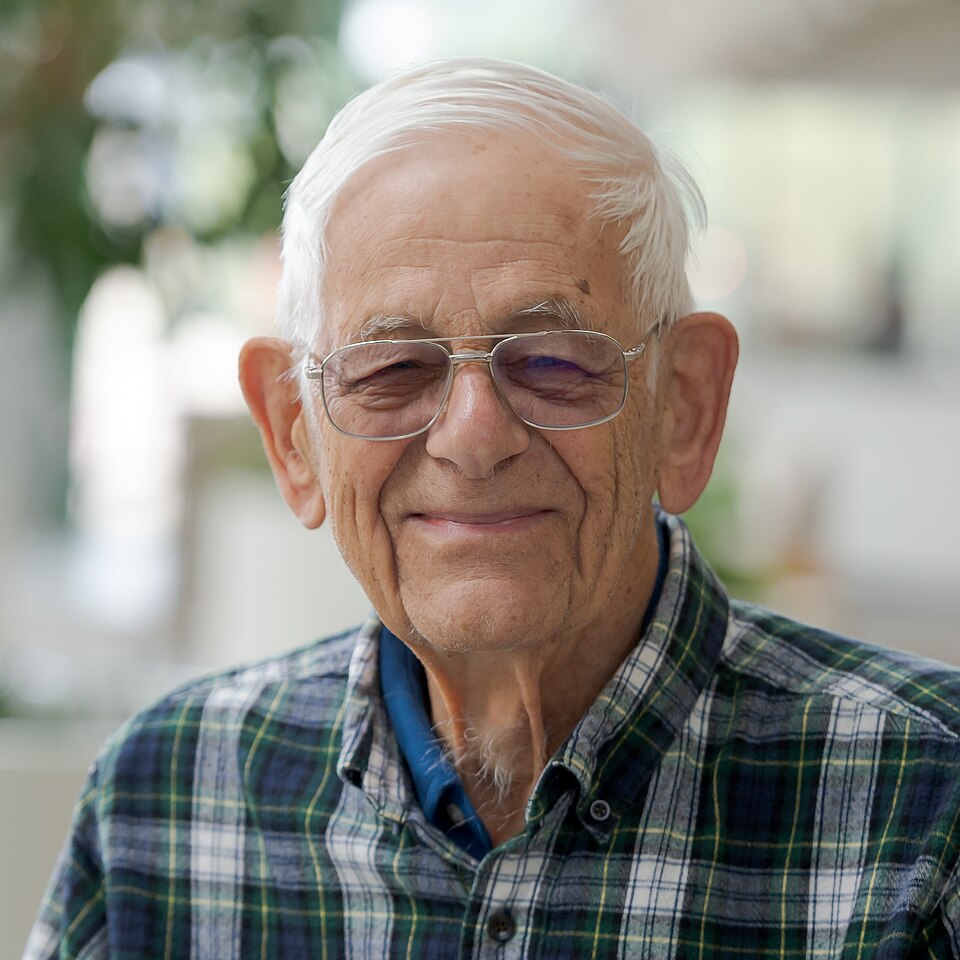
Paul Benioff๐Ÿ”‘
1930โ€“2022
Paul Benioff
Researcher
๐Ÿ’ก First proposed a quantum mechanical model of the Turing machine, showing that computation could in principle be performed by a quantum system evolving unitarily โ€” the founding theoretical proposal that quantum computers could exist and compute
๐Ÿ–ฅ๏ธ AI & Computing Sciences DivisionQuantum Computing Center
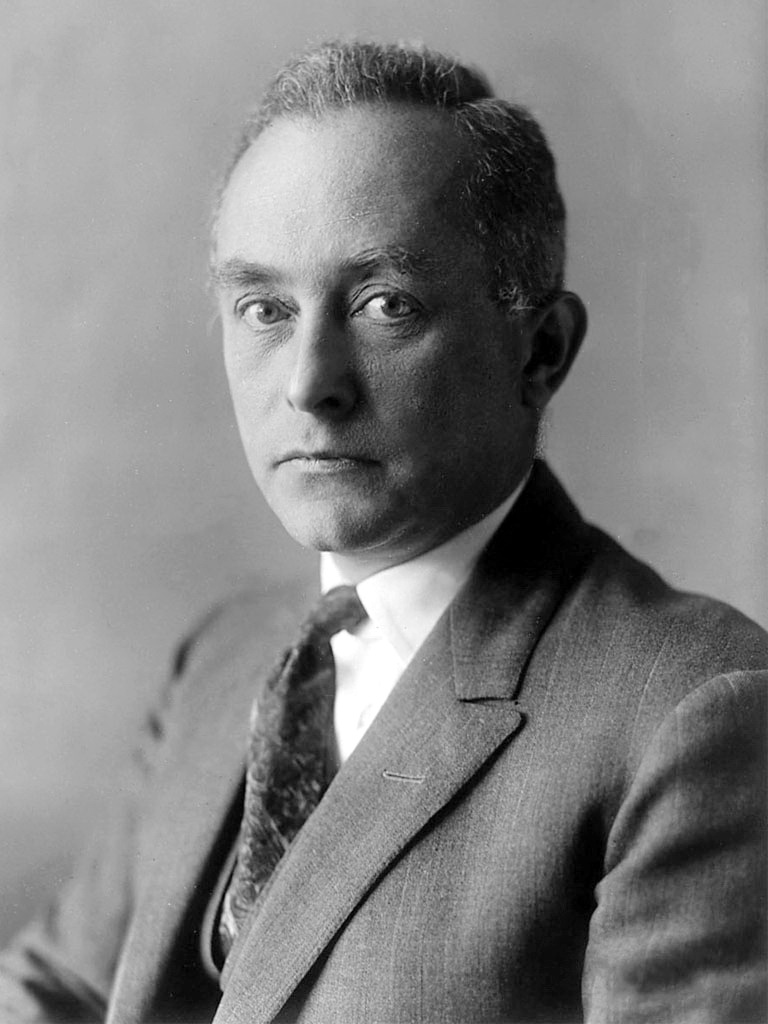
Max Born๐Ÿ”‘
1882โ€“1970
Max Born
Researcher
๐Ÿ’ก Developed the Born rule for quantum probability and, with collaborators, foundational adiabatic theorem work in quantum mechanics โ€” the exact physical principle (a system remains in its ground state under slow enough evolution) underlying adiabatic quantum computing and quantum annealing
๐Ÿ–ฅ๏ธ AI & Computing Sciences DivisionQuantum Computing Center
Walter Heitler๐Ÿ”‘
1904โ€“1981
Walter Heitler
Researcher
๐Ÿ’ก Co-developed (with Fritz London) the first quantum mechanical treatment of the covalent chemical bond, founding quantum chemistry โ€” the discipline whose molecular Hamiltonians are the primary target problems that VQE and other quantum chemistry algorithms aim to solve
๐Ÿ–ฅ๏ธ AI & Computing Sciences DivisionQuantum Computing Center
๐Ÿง‘โ€๐Ÿ”ฌ
๐Ÿ”‘
1903โ€“1995
Alonzo Church
Researcher
๐Ÿ’ก Founded lambda calculus and the Church-Turing thesis, establishing the formal notion of computability and effective procedure โ€” the theoretical foundation from which the extended Church-Turing thesis (and its quantum-computational challenge) and quantum complexity classes are defined
๐Ÿ–ฅ๏ธ AI & Computing Sciences DivisionQuantum Computing Center
Stephen Wiesner๐Ÿ”‘
1942โ€“2021
Stephen Wiesner
Researcher
๐Ÿ’ก Invented conjugate coding and quantum money, the founding concepts that directly led to the BB84 quantum key distribution protocol, the theoretical origin of quantum cryptography
๐Ÿ–ฅ๏ธ AI & Computing Sciences DivisionQuantum Computing Center
๐Ÿง‘โ€๐Ÿ”ฌ
๐Ÿ”‘
1915โ€“1998
Richard Hamming
Researcher
๐Ÿ’ก Invented Hamming codes, the first practical error-correcting codes capable of detecting and correcting bit errors, founding the coding theory whose structure (stabilizer codes, CSS codes) quantum error correction directly generalizes to protect qubits from decoherence
๐Ÿ–ฅ๏ธ AI & Computing Sciences DivisionQuantum Computing Center
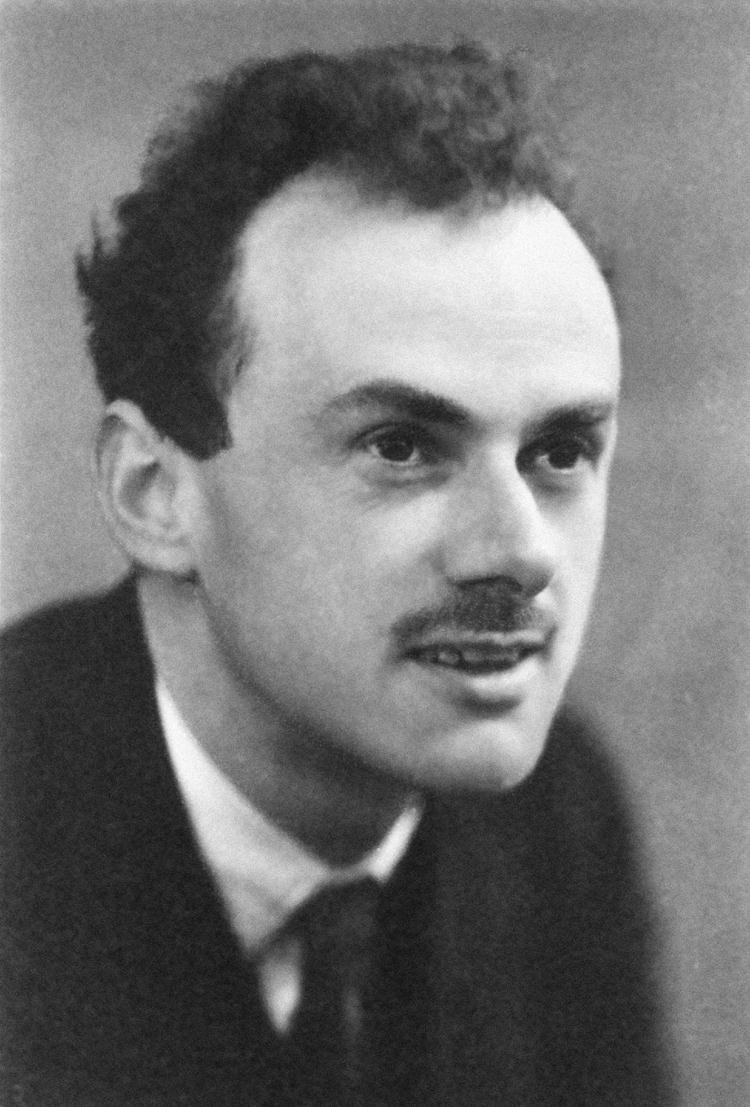
Paul Dirac๐Ÿ”‘
1902โ€“1984
Paul Dirac
Researcher
๐Ÿ’ก Developed bra-ket (Dirac) notation and the transformation theory of quantum mechanics unifying wave and matrix mechanics, providing the exact mathematical language (state vectors, unitary operators) in which quantum gates and circuits are formally described
๐Ÿ–ฅ๏ธ AI & Computing Sciences DivisionQuantum Computing Center
๐Ÿง‘โ€๐Ÿ”ฌ
๐Ÿ”‘
1927โ€“1999
Rolf Landauer
Researcher
๐Ÿ’ก Formulated Landauer's principle โ€” that erasing information has an unavoidable minimum thermodynamic energy cost โ€” establishing that 'information is physical', the foundational link between information theory and physics underlying quantum information science
๐Ÿ–ฅ๏ธ AI & Computing Sciences DivisionQuantum Computing Center
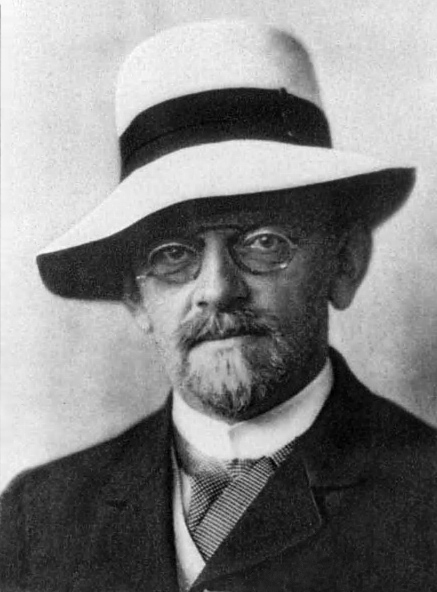
David Hilbert๐Ÿ”‘
1862โ€“1943
David Hilbert
Researcher
๐Ÿ’ก Developed Hilbert space theory, the infinite-dimensional inner-product-space formalism in which quantum states live โ€” the exact mathematical framework in which quantum machine learning algorithms (quantum kernels, feature maps) encode and manipulate data
๐Ÿ–ฅ๏ธ AI & Computing Sciences DivisionQuantum Computing Center
Eugene Wigner๐Ÿ”‘
1902โ€“1995
Eugene Wigner
Researcher
๐Ÿ’ก Founded rigorous quantum measurement theory (the 'Wigner's friend' thought experiment) and applied group-theoretic symmetry principles to quantum mechanics, foundational to understanding how classical information (predictions, classifications) is extracted from quantum neural network circuits via measurement
๐Ÿ–ฅ๏ธ AI & Computing Sciences DivisionQuantum Computing Center
๐Ÿง‘โ€๐Ÿ”ฌ
๐Ÿ”‘
1952โ€“2005
Leonid Khachiyan
Researcher
๐Ÿ’ก Developed the ellipsoid method, the first polynomial-time algorithm for linear programming, founding the theory of efficient classical optimization that hybrid quantum-classical algorithms (QAOA, VQE) rely on for their classical optimization loop
๐Ÿ–ฅ๏ธ AI & Computing Sciences DivisionQuantum Computing Center
Yuri Manin๐Ÿ”‘
1937โ€“2023
Yuri Manin
Researcher
๐Ÿ’ก Independently proposed (alongside Feynman) that quantum computers could simulate quantum physical systems exponentially more efficiently than classical computers, an early foundational insight motivating quantum simulation as a killer application of quantum computing
๐Ÿ–ฅ๏ธ AI & Computing Sciences DivisionQuantum Computing Center
John Bardeen๐Ÿ”‘
1908โ€“1991
John Bardeen
Researcher
๐Ÿ’ก Co-invented the transistor and co-developed BCS theory of superconductivity, providing both the semiconductor and superconducting physics foundations that superconducting qubits (the leading physical quantum computing platform) are engineered from
๐Ÿ–ฅ๏ธ AI & Computing Sciences DivisionQuantum Computing Center
Walther Ritz๐Ÿ”‘
1878โ€“1909
Walther Ritz
Researcher
๐Ÿ’ก Developed the Rayleigh-Ritz variational method for approximating eigenvalues and eigenfunctions, the exact mathematical principle underlying the Variational Quantum Eigensolver (VQE), the leading near-term quantum algorithm for molecular and materials simulation
๐Ÿ–ฅ๏ธ AI & Computing Sciences DivisionQuantum Computing Center